If cold weather makes walking harder or your MS symptoms feel worse, you’re not imagining it. Many people search for MS walking tips this time of year because cold temperatures can trigger unexpected changes – like heavier legs or extra fatigue that seems to show up out of nowhere.
Temperature changes affect your nervous system’s ability to efficiently send messages, but that doesn’t mean you have to give up your daily walks. With a few small adjustments, you can stay warm, steady, and confident no matter what the forecast says.
By the way, have we met? I’m Dr. Gretchen Hawley, an MS-Specialized Physical Therapist and founder of The MSing Link – an online wellness program, podcast, and book. I help people with multiple sclerosis move better, feel stronger, and take control of their health using evidence-based, MS-specific strategies.
If you love learning the “why” behind MS symptoms, be sure to check out my MSing Link podcast episode about cold intolerance below. It’s a seriously misunderstood topic and can make a big difference in how you manage your day-to-day movement.
Why Is Cold Weather Hard with MS?
We talk a lot about heat intolerance in MS, but cold intolerance is just as real. Many of my clients have been told it doesn’t exist, but research (and experience!) prove otherwise. If you ever notice your symptoms flaring as temperatures drop, you may be dealing with cold intolerance –it can happen when your core body temperature drops by just half a degree (some resources even suggest ¼ of a degree).
That small change can slow the messages traveling between your brain and body, which might temporarily worsen symptoms like weakness, fatigue, balance changes, or numbness. Cold intolerance can sneak up on you when you step outside on a chilly day, sit still for too long, or even when you drink something cold.
The good news? Once your core temperature comes back up, your symptoms usually ease within minutes. Understanding this connection is the first step to staying active through the winter–and that’s where these MS walking tips come in.
9 MS Walking Tips to Stay Steady & Strong in Cold Weather
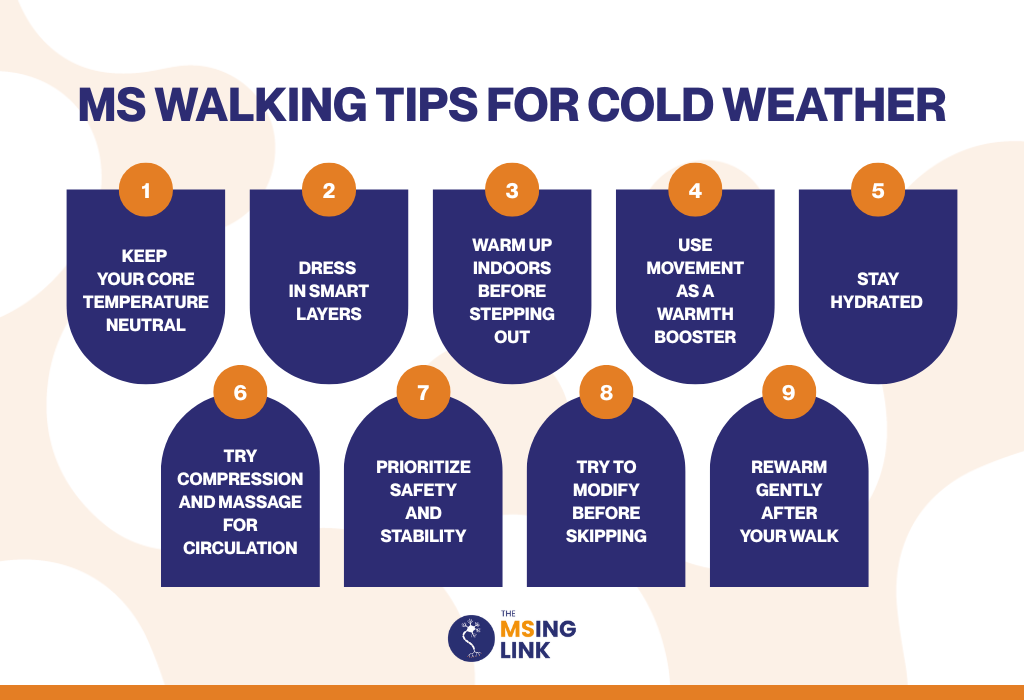
9 MS walking tips for cold weather with Dr. Gretchen Hawley
As we get further into the chilly season, walking with MS can feel tougher. The cold might make your legs feel heavier, energy fade faster, or balance feel a little off. With a few small changes, you can stay warm, confident, and in control, even on the iciest days.
These science-backed strategies are simple, practical, and can help you better manage your symptoms. They’re tools you can use to support your body so walking stays something you enjoy, not something you have to push through.
Here are my top 9 MS walking tips for cold weather:
Keep your core temperature neutral
Dress in layers–but smartly
Warm up indoors before stepping out
Use movement as a warmth booster
Stay hydrated (even when you don’t feel thirsty)
Try compression and massage for circulation
Prioritize safety and stability
Try to modify before skipping
Rewarm gently after your walk
Keep Your Core Temperature Neutral
Your goal is to prevent your body from cooling down too much. Before heading outside, sip warm water or tea to gently raise your core temperature. During your walk, keep that warm drink with you or take a quick break indoors if you notice your symptoms starting to worsen.
Small temperature changes make a big difference, so start warm to stay warm. And if you’re the type who gets cold easily, a heating pad on your lap before heading out can help your body adjust to the temperature shift.
Dress in Layers–But Smartly
The right layers are your first line of defense. Start with a moisture-wicking base layer to pull sweat away from your skin. Add a soft, insulating layer for warmth, then top it off with a wind-resistant jacket to block the chill.
Keep your hands, feet, and head warm with gloves, a hat, and thermal socks. If your feet tend to feel cold or heavy, compression socks can help improve blood flow and keep your muscles active. Always pick layers you can unzip or peel off if you start to warm up to avoid overheating.
Warm Up Indoors Before Stepping Out
Heading straight from the couch into the cold can be a shock to your system. Spend a few minutes moving inside first: try seated marches, torso twists, or gentle arm circles to get your blood flowing.
If you can’t lift your legs very high, simply trying activates your muscles and begins warming your body from the inside out. Short warm-ups help prevent stiffness and make those first few minutes of walking feel smoother.
MS Mobility Equipment Guide
Get your comprehensive PDF filled with MS-friendly tools and products to help improve mobility and manage symptoms!
Movement is one of the most powerful ways to manage cold intolerance with MS. If you start to feel your symptoms creeping in mid-walk, pause for a quick reset. Shake out your arms, swing your legs, or take a few gentle steps in place.
These adjustments help raise your temperature and re-energize your muscles. Remember, you don’t have to walk far or fast to make progress. Try to focus on consistency and comfort–not perfection.
Stay Hydrated (Even When You Don’t Feel Thirsty)
Cold weather often makes us forget to drink water, but staying hydrated supports muscle function, energy, and balance. Some people with MS avoid water because of urinary urgency, but that can actually make your symptoms worse.
Try sipping warm water or herbal tea throughout the day instead of chugging large amounts all at once. You’ll stay hydrated and help keep your core temperature steady.
Try Compression and Massage for Circulation
If your legs or feet get cold easily, compression socks or leggings can be game-changers. They provide gentle pressure that improves blood flow and helps your muscles feel supported.
You can also use gentle self-massage after walking. Rubbing your thighs, calves, or belly for a few minutes increases circulation and raises your internal temperature. This is especially helpful if you’ve been sitting afterward or notice lingering coldness in your limbs.
Prioritize Safety and Stability
Cold muscles can make balance trickier, and icy surfaces add extra risk. If you feel unsteady on your feet, consider using a cane, walking poles, or traction cleats for stability.
Choose walking routes that are clear, well-lit, and less exposed to wind. And if you use mobility aids, make sure the grips are dry and secure before you head out. These precautions can go a long way in preventing slips or falls.
Try to Modify Before Skipping
On extremely cold or icy days, swap your outdoor walk for an indoor one. Try a treadmill, mall walking, or a few laps around your house. What matters most is keeping your body moving, not where you move.
You can also follow along with MS-specific exercises from The MSing Link program. These movements are designed to build strength, coordination, and mobility year-round–so you can stay active whether you’re indoors or outdoors.
Rewarm Gently After Your Walk
Once you’re back inside, take a few minutes to transition. Remove your outer layers slowly, sip something warm, and stretch your legs while your body re-balances. Jumping straight into a hot shower can cause a sudden spike in temperature that leads to heat intolerance.
Instead, ease into warmth gradually to help your body regulate more smoothly and feel refreshed instead of overheated or sluggish.
Planning Ahead for Cold Weather Walks
The best way to manage cold intolerance is to plan ahead. Don’t wait for symptoms to appear–anticipate them. Check the weather before you head out. If you know temperatures are dropping, be proactive by doing things like:
Sipping something warm first thing in the morning
Moving around before you bundle up
Keeping layers ready throughout the day
Being proactive helps prevent the sudden dips in core temperature that can make walking harder. You can also track your body’s patterns. Do you notice your symptoms getting worse in the evening? Try walking earlier. Do you feel more fatigued after sitting for long stretches? Build in quick movement breaks. Small tweaks can add up to big changes in how you feel.
Stay Warm and Feel Empowered This Season
Cold weather doesn’t have to hold you back from walking or staying active with MS. Once you understand how temperature affects your body and how to manage it, you can move through fall and winter feeling more confident and in control.
Looking for more ways to make life with multiple sclerosis easier? Download my free MS Mobility Tools Guide! It’s packed with practical tools and product recommendations to help you feel stronger, steadier, and more balanced.
Have any questions about these MS walking tips or managing cold intolerance? Send me a DM on Instagram @doctor.gretchen–I’m always here to help!
As a physical therapist & Multiple Sclerosis Certified Specialist, I have spent the last 10 years teaching people with MS how to feel more confident & empowered through MS-specific exercises and strategies.
If you want support and encouragement, plus a healthy dose of tough love, come follow me on Instagram (@doctor.gretchen) or on YouTube @DoctorGretchenHawley. It's where I share daily tips, tricks, and information about new offers — plus, you’re bound to feel more empowered, hopeful, & motivated after watching each post and video!
Has multiple sclerosis caused you to become fearful, frustrated, or overwhelmed because your walking or mobility isn’t improving?
Dr. Gretchen Hawley's The MSing Link offers a comprehensive guide to taking control of your MS symptoms and improving your mobility through MS-specific exercises and strategies.


%20(1).png)